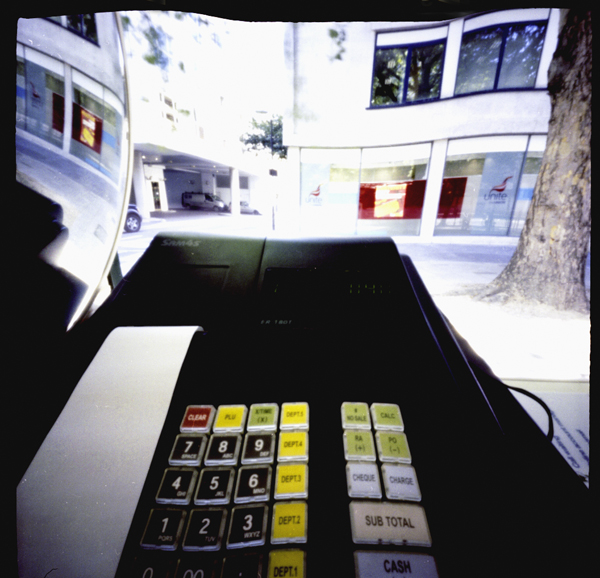
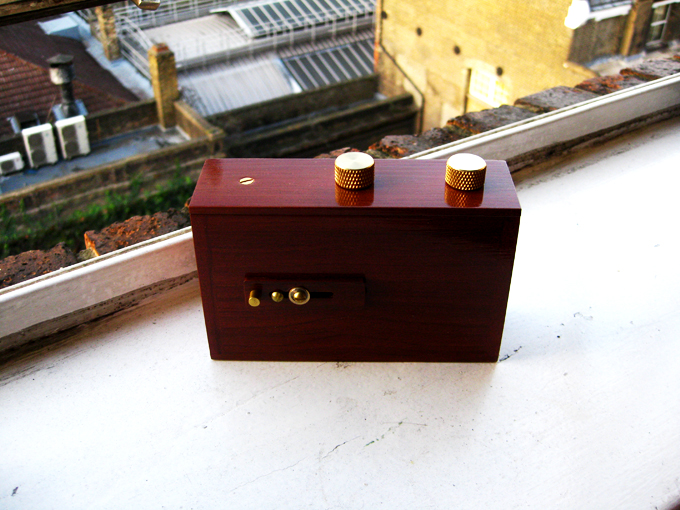
Whereas the year is fresh, this new start seems to call for a more blurry-eyed look at the everyday – as if looking through the crinkled cellophane on a packet of jujubes. What better way to look anew than through the lazy eyes of a pinhole camera. As discussed once before, it may be that the hazier the image, the more you see.
Showing posts with label animation. Show all posts
20 January 2013
11 June 2012
Displays of Jubilation
Over the last month, one object was particularly visible at those ad hoc shops selling souvenirs.
The Union Jack flag featuring a cameo of the Queen (sporting a sunny yellow ensemble) was seen all over London through the Jubilee celebrations… second only, perhaps, to the visibility of unadulterated Union Jacks. The way it was flown at shops and kiosks often made it seem more like a shop-front adornment than a product for sale. In this way, the shops stood as expressions of neighbourhood celebration. The flag also became part of an elaborate stage for the display of other things.
Another Jubilee object was particularly prominent along Tottenham Court Road. At the three kiosks selling handbags, luggage, and souvenirs, paper Elizabeth II masks were affixed to the retractable handles of rolling suitcases. I love how the masks seem to come alive through the angles of their placement – the little tilts of the head and position of the elastic – and how the suitcases themselves become regal – but comically dumpy – bodies for the heads above.
Although I thought these clever displays may be emulating each other, it seems these three kiosks share the same managers. This presents an interesting set of questions about local practice, curation, and ad hoc-ness; in any case, their displays do make me smile.
The Union Jack flag featuring a cameo of the Queen (sporting a sunny yellow ensemble) was seen all over London through the Jubilee celebrations… second only, perhaps, to the visibility of unadulterated Union Jacks. The way it was flown at shops and kiosks often made it seem more like a shop-front adornment than a product for sale. In this way, the shops stood as expressions of neighbourhood celebration. The flag also became part of an elaborate stage for the display of other things.
Another Jubilee object was particularly prominent along Tottenham Court Road. At the three kiosks selling handbags, luggage, and souvenirs, paper Elizabeth II masks were affixed to the retractable handles of rolling suitcases. I love how the masks seem to come alive through the angles of their placement – the little tilts of the head and position of the elastic – and how the suitcases themselves become regal – but comically dumpy – bodies for the heads above.
Although I thought these clever displays may be emulating each other, it seems these three kiosks share the same managers. This presents an interesting set of questions about local practice, curation, and ad hoc-ness; in any case, their displays do make me smile.
04 March 2012
Through a hole, darkly
I have been experimenting recently with my pinhole camera. It's a very simple device; it has no viewfinder, batteries, or play-back function, and uses medium-format film.
Because of the rudimentary nature of camera – and because the shutter must be manually opened for a number of seconds – the resulting images are blurry and atmospheric and warp in delightful ways.
This sort of photographic practice chimes with my project in a number of respects. To start, because the shutter is open for so long, the images better capture the animation of things and spaces. It captures movement – the unsteadiness of my hand, the flow of the city, and the vibrations of stationary things.
Equally as exciting to me, the camera itself feels like a thing as opposed to a technology. In this, way, the camera remains a thing among things through the photographic process.
Because I don’t need to hold it to my face, the pin-hole camera doesn’t mediate my experience of the space. My presence in the scene remains uninterrupted. The camera, the other things in the shop, the shopkeeper, and I can all actively be in the space as its light and colour are captured on film.
The camera has become a welcomed talking point with shopkeepers. Whereas the D-SLR can feel techy and conspicuous, the pin-hole is charming and unobtrusive.
Although photography need not be about taking, street photography is often associated with masculinity, aggression, and a patriarchal way of seeing. Certainly participation and openness can be felt in digital street photography as well. Still, it feels like the pin-hole camera tends towards greater sharing, participation, and parity.
I am really taken by the softness of the images in contrast to the characteristic plasticity or shininess of the brands. The pin-hole camera literally takes the edge off and references the tenderness of the curation. It seems to challenge the linearity and brandedness of the things in these places. By capturing pattern and colour, the pin-hole melts these brands into the texture of the city.
Because of the rudimentary nature of camera – and because the shutter must be manually opened for a number of seconds – the resulting images are blurry and atmospheric and warp in delightful ways.
This sort of photographic practice chimes with my project in a number of respects. To start, because the shutter is open for so long, the images better capture the animation of things and spaces. It captures movement – the unsteadiness of my hand, the flow of the city, and the vibrations of stationary things.
Equally as exciting to me, the camera itself feels like a thing as opposed to a technology. In this, way, the camera remains a thing among things through the photographic process.
Because I don’t need to hold it to my face, the pin-hole camera doesn’t mediate my experience of the space. My presence in the scene remains uninterrupted. The camera, the other things in the shop, the shopkeeper, and I can all actively be in the space as its light and colour are captured on film.
The camera has become a welcomed talking point with shopkeepers. Whereas the D-SLR can feel techy and conspicuous, the pin-hole is charming and unobtrusive.
Although photography need not be about taking, street photography is often associated with masculinity, aggression, and a patriarchal way of seeing. Certainly participation and openness can be felt in digital street photography as well. Still, it feels like the pin-hole camera tends towards greater sharing, participation, and parity.
I am really taken by the softness of the images in contrast to the characteristic plasticity or shininess of the brands. The pin-hole camera literally takes the edge off and references the tenderness of the curation. It seems to challenge the linearity and brandedness of the things in these places. By capturing pattern and colour, the pin-hole melts these brands into the texture of the city.
Subscribe to:
Posts (Atom)